
SPRINGTIME: its what's for dinner!
My recent newspaper column: Eating seasonally takes practice, but brings tasty rewards.

“I believe eating seasonally is something that desperately needs to be brought back into the rhythm of our lives. Our disconnect from the food system due to a reliance on convenience, is leading to a lack of nutrition in the average American diet.” This is according to Sarah Stock, a registered dietitian with Aspirus St. Luke’s, specializing in the nutritional benefits of eating seasonal foods.
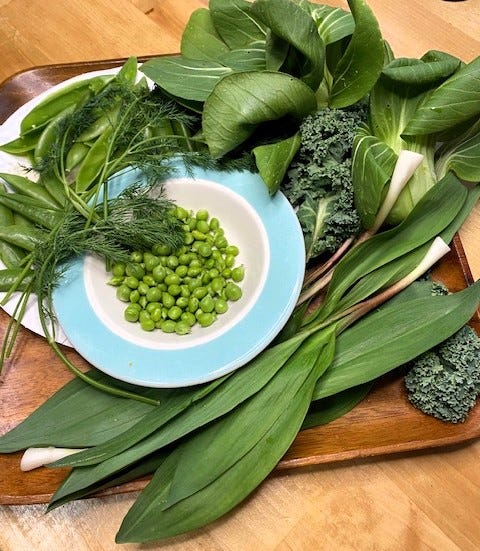
Lucky for us, springtime provides an abundance of edible goodness, making today a convenient time to shop local and give seasonal eating a try. Going seasonal with your mealtime menu can be healthier, and less expensive-buying what is “in-season” might mean no corn in January, no green beans until July but the abundance of Spring can make up for that!
Spring produce comes on like a train, picking up speed each and every week for a month or two. Trying to control yourself after a long cold winter can be challenging-next thing you know- your fridge is bulging with all that fresh goodness. So it should follow that eating seasonally would be easy.
But we all know, what often could be, isn’t always so.
Standing before your refrigerator consider this simple shift, ask- what’s in need of using -instead of building meals based on random “hmm, what do I want to eat tonight?”
This ask can help to cut your food waste and start that move urging you toward using what you have, in a way that makes sense for integration into daily life.
In commercial kitchens this is known as FIFO: the food that has been in storage longest (“first in”) should be the next food used (“first out”). This method helps restaurants (and home cooks) keep their food storage organized and presses you to use food before it goes bad.
Most weeks I organize a meal (or two) designed to clean out the fridge. You can do the same when you make your meal plan for the week- you know that broccoli lingering in the produce bin, the out of season tomato softening on the counter, the limp celery? All of it would work well as a batch of steamed or stir fried vegetables that are a blank canvas waiting to be paired with the last tortillas and the meat of that one drumstick for a filling Tostada. Or tossed in a bowl of beaten eggs and sesame oil, poured into a hot skillet for a tasty Egg Fu Yung.
Into the kitchen.
For this article I took a bunch of asparagus, and ramps, a few leaves of kale, and some fresh spinach, along with a handful of snap peas and turn them into a multi-course meal.
Placing a packed cup of Ramp tops, the curls off a few stems of kale, two cups of fresh spinach along with 4 tablespoons of olive oil- into a blender bowl- made an easy pesto. I used this on some crackers as a pre-dinner snack, and saved the rest for the pasta boiling away on the stove. Meanwhile I loosened the larger snap peas and gathered up the ‘peas’ inside.
Slicing the snap peas diagonally, stripping more kale from stems, and chopping asparagus and ramps into 1” pieces got me closer to my main entree -Pasta Primavera (pasta of Spring).
I tossed these ingredients into the pasta pot for a brief cook while the noodles were just finishing up. Pouring off the water left me a bountiful bowl of fresh goodness, stirring in the peas and pesto, tasting for salt and adding a dash of red vinegar brought me a hearty entree, sans meat.


Make a plan when it comes to buying seasonally.
Ok. The first rule of The Plan: Don’t over buy! I know, this is hard--especially in Spring. Everything is just so fresh. Just looking at it makes you feel healthy. Everything seems like a good idea. But abundance without a plan quickly becomes waste.
The advice from this seasoned cook? Start small, trust yourself to rely on what’s already on hand, and resist the urge to over complicate things.
Try this: Buy or harvest in smaller batches-think- “I can go back for more.” Its good to let your kitchen breathe between grocery hauls, and actually see the shelving in the fridge every once and while!
It can take practice, but tell yourself -you don’t need everything at once. Really! Don’t reach for that extra just-in-case item... trust yourself, your fridge and pantry to make up any shortages you might encounter.
As you and your kitchen learn to work with the season’s abundance, routines and habits may begin to shift, creating a more deliberate approach to your cooking. Over time, this mindset just might become less trend and more a practice of intention over excess.
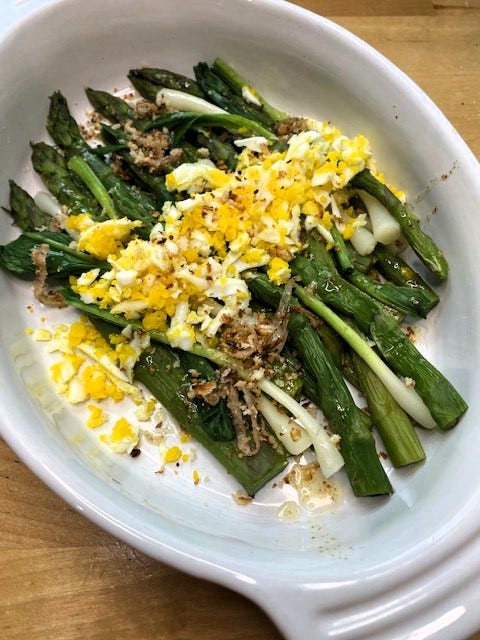
Still wishing you had grabbed that second bunch of asparagus for your Primavera? Go with in! Boil more noodles, add another glug of olive oil, chop the last few olives in the jar, and toss in with any remaining greens, then serve with pride, knowing you are meeting the dinner plate where you are!
Spring doesn’t last forever-but it’s a great place to begin the practice of seasonal eating. Take this culinary challenge and enjoy the chance to test your creativity in the kitchen, while building a deeper connection to the food you enjoy. As always, Thank you for reading and Bon Appetit Y’all!
SPRING TIME PESTO
6-8 Ramps- tops ONLY-to make 1 well packed cup (depending on their size or your tolerance).
2 cups Fresh baby spinach-well packed
3 medium kale leaves- pull curly greens from stem (1/2 cup +/-)
4 tablespoons Olive oil
1/2 teaspoon salt
2 teaspoons red vinegar
3 tablespoons of any FRESH herbs you might have (dill or parsley are good choices)
Wash and cut off the entire green top of ramps -set aside.
In a blender place the ramp tops, kale and spinach (and herbs if using)- pour olive oil, salt and vinegar over the ingredients.
Blend on low to start the ingredients moving. You may need to stop the blender and stir up the greens once or twice to get things moving- be patient.
Puree everything until it is smooth and no pieces of the greens are left.
Taste for salt, vinegar and more oil if you want. Can be stored in the refrigerator well covered for 3-5 days. ENJOY!